In 2025-26, we held an InFrame* research grant on ‘Gender-based microaggressions in research environments’ (Co-PIs: Gillian Brown, Nicole Tausch, Csilla Pákozdy and Jinwen Xie). The grant supported a number of empirical studies and also led to the creation of a set of informational resources about micromessages (posters, leaflets and postcards) (created by interns: Nicole Jacobes and Ashley Smith), which are available open access here: https://osf.io/bhq39/overview
*InFrame was a Wellcome Trust ‘Institutional Funding for Research Culture’ grant (number 228092/Z/23/Z) led by the Universities of Glasgow, Edinburgh and St Andrews, UK.
Gender-based micromessages in research settings
By Csilla Pákozdy
Introduction to the project
The research culture within universities, departments and lab groups is defined just as much by the everyday interactions of the people within them as by institutional policy. The way in which colleagues interact with each other socially can create a positive, inclusive, collegiate atmosphere, but situations in which some people feel marginalised, excluded or dismissed can also arise, often unintentionally. Individuals are not always aware of how their small actions and comments can impact others, especially those who are part of minoritised or disadvantaged groups.
Psychologists have defined two types of subtle interactions that can impact others (collectively called micromessages):
- Microexclusions, which include comments or behaviours that communicate prejudiced or derogatory views and attitudes (e.g., sexist jokes).
- Microinclusions, whichare small-scale actions that can create a sense of inclusion or belonging (e.g., use of correct pronouns).
By definition, these types of interactions are subtle and can be ambiguous, which means that individuals might not understand the negative impacts of their behaviour, or they might not appreciate how small actions can improve the experiences of others. The nature of these interactions also means that individuals may find it hard to report negative behaviour or even articulate why it has negatively impacted their mood, work or relationships with colleagues.
In this InFrame project, we focused on microexclusions and microinclusions that are specifically related to gender, given that women and non-binary individuals experience numerous barriers to their research careers and cite interpersonal relationships (and institutional culture) as a key reason for leaving, or considering leaving, academia (Spoon et al., 2023). Our project team consisted of a group of excellent postdoctoral and postgraduate researchers, undergraduate interns and senior academic staff. Over the course of the project, we conducted both qualitative and quantitative research that examined the types of micromessages individuals are experiencing in Scottish research spaces, as well as the psychological variables that influence how individuals appraise these micromessages.
Quantitative questionnaire study
In order to examine the psychological variables that impact the ways in which individuals appraise microexclusions, we conducted an online questionnaire study in which 986 participants (494 men, 492 women) were presented with fictional microexclusion scenarios from a previous study by Basford and colleagues (2014). These fictional scenarios depicted gender-based microexclusions of varying levels of severity occurring in a workplace setting; e.g., two characters gossiping about a female colleague who dresses “too feminine” for the office, or a manager assuming his female subordinate had needed help to put together a presentation she single-handedly developed. Participants were asked to rate on a scale from ‘strongly disagree’ to ‘strongly agree’ how much they agreed with a set of statements that asked i) whether the actions of the person committing the microexclusion were unfair and discriminatory (‘unfairness’), ii) whether the actions of this person were based on their prejudice and were purposeful (‘prejudice’), and iii) whether the person on the receiving end of the microexclusion would reasonably be upset (‘emotional response’).
Participants then completed additional questionnaires about the extent to which they held liberal feminist attitudes, their levels of benevolent and hostile sexism, the extent to which they endorsed restrictive gender roles, the extent to which they were conscious of stigmas against their own gender, whether they held a zero-sum perspective on gender status and their political orientation.
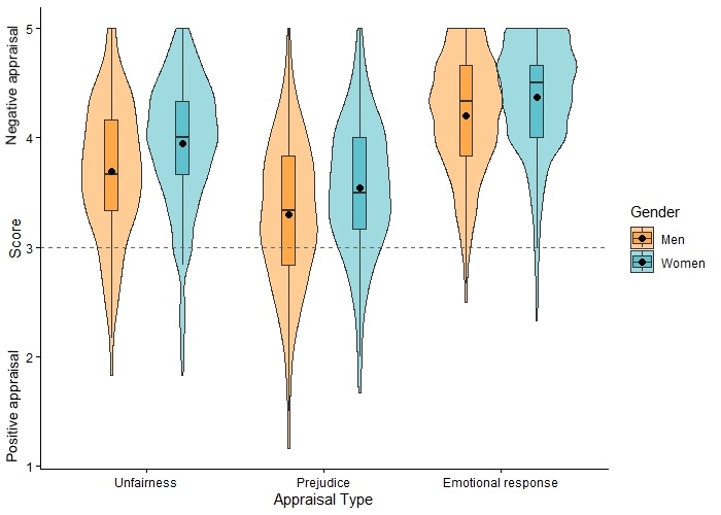
Figure 1 (by Jinwen Xie): The appraisal of microexclusion scenarios; higher values indicate more negative appraisal.
The results showed that there was a gender difference in appraisal, with, on average, women rating the scenarios as more unfair and more likely to have occurred due to prejudice than men did. Both men and women agreed strongly that the scenarios are likely to cause upset and that the target would be right to be upset, while the statement that the person committing the microexclusion was doing so purposefully garnered the lowest agreement from both genders.
Personal attitudes also had an impact on participants’ appraisal of the scenarios. Liberal feminist attitudes and gender stigma consciousness were both significant positive predictors of appraisal in both men and women, meaning that those with more feminist attitudes and higher stigma consciousness were more likely to appraise the scenarios negatively. For men, political orientation also influenced appraisal; on average, male participants who reported leaning more to the right politically appraised the scenarios less negatively than did left-leaning male participants. The findings of this study are being written up for submission to an academic journal.
Qualitative interviews
We also investigated what kind of micromessages researchers and research-adjacent staff are experiencing in Scottish research settings, again focusing on micromessages related to gender. To this end, we conducted a set of confidential, semi-structured interviews with participants (N= 20) who were working in research or research support roles in various Scottish universities. Over the course of each interview, participants were given an introduction to different types of microexclusions and microinclusions, and they were invited to discuss their experiences (or lack thereof) with them. With regards to microexclusions, participants were asked whether they had experience with denials of the reality of sexism, expectations of ‘leaving their gender at the door’, assumptions of lack of competence or traditional gender roles, use of derogatory language, and systemic microexclusions coming from their environment rather than individuals. For microinclusions, participants were asked about their experiences with others acknowledging the reality of sexism, the use of inclusive language, affirmations of their contributions, active listening, provision of support both personal and professional, and systemic microinclusions.
The interviews followed a detailed protocol that received ethical approval, and we were mindful of the sensitivity of this research topic. Interviewees provided informed consent and were provided with relevant support information after the interview. We are currently coding the anonymised, redacted transcripts; here, we summarise some preliminary findings. Many participants felt that while their workplace was making efforts to be inclusive, sexist attitudes were often still present beneath the surface. Participants reported experiencing or witnessing dismissive attitudes towards the barriers faced by women in academia and a tendency to push women towards administrative, pastoral and social roles that do not necessarily contribute to their career progression, and they reported that women’s ideas are sometimes only accepted once put forward by a male colleague. Despite these challenges, most participants felt that their colleagues were generally supportive, contributions were recognised equally regardless of gender, and that they had at least a few trusted colleagues who could give them support. Once the qualitative analyes have been completed, this research will be submitted to an academic journal.
Project outcomes
In addition to the academic manuscripts that are in preparation, the results of the quantitative study were presented at the annual conference of the European Human Behaviour and Evolution Association (Leiden, Netherlands; April 2026). As part of the project, we have also worked on developing a short informative presentation and interactive activity, which were piloted during one of the InFrame Leadership Development Workshops and could be used to educate researchers and university staff about micromessages. Two of the undergraduate interns have created a set of visual materials to serve as educational materials about micromessages, including posters, leaflets and postcards.
Reflections
This project has been not only a successful but also an immensely enjoyable one, and we have been able to achieve all of our objectives as a team. Although we experienced a few setbacks, such as a prolonged ethical approval process, with the support of InFrame we were able to overcome these challenges. While we have answered the research questions we set out to answer, the project has also revealed new perspectives and promising avenues for future studies.
References
Basford, T. E., Offerman, L. R., & Behrend, T. S. (2014). Do you see what I see? Perceptions of gender microaggressions in the workplace. Psychology of Women Quarterly, 38(3), 340-349.
Spoon, K., LaBerge, N., Wapman, K., Zhang, S. & Morgan, A. (2023). Gender and retention patterns among U.S. faculty. Science Advances, 9, eadi2205.